Hollow parts.
Solid thinking.
Turn your design into a manufacturable hollow part. Custom housings, tanks and protective cases with integrated engineering, tooling and production in Zhejiang, China.
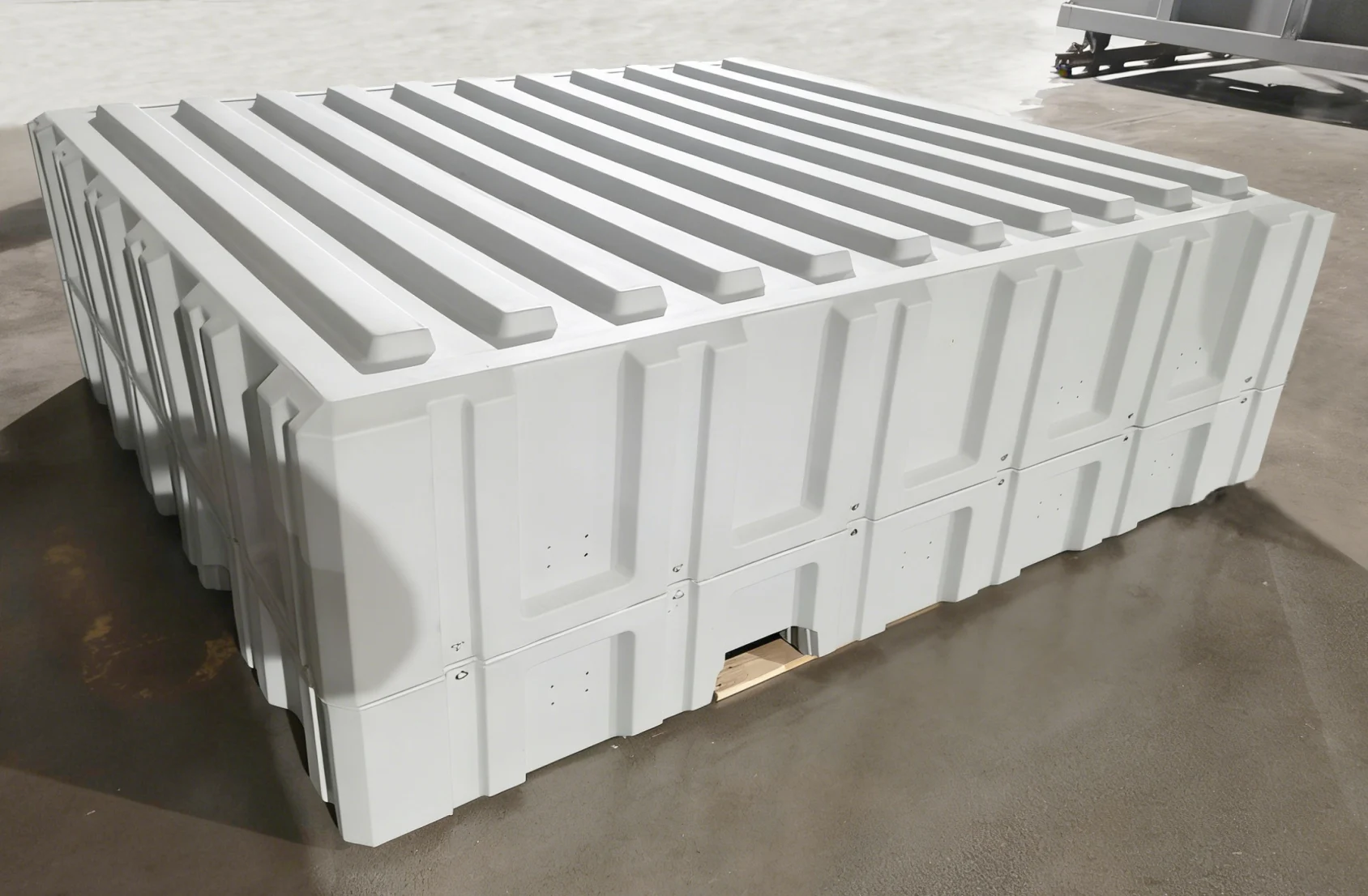
Built around what you build.
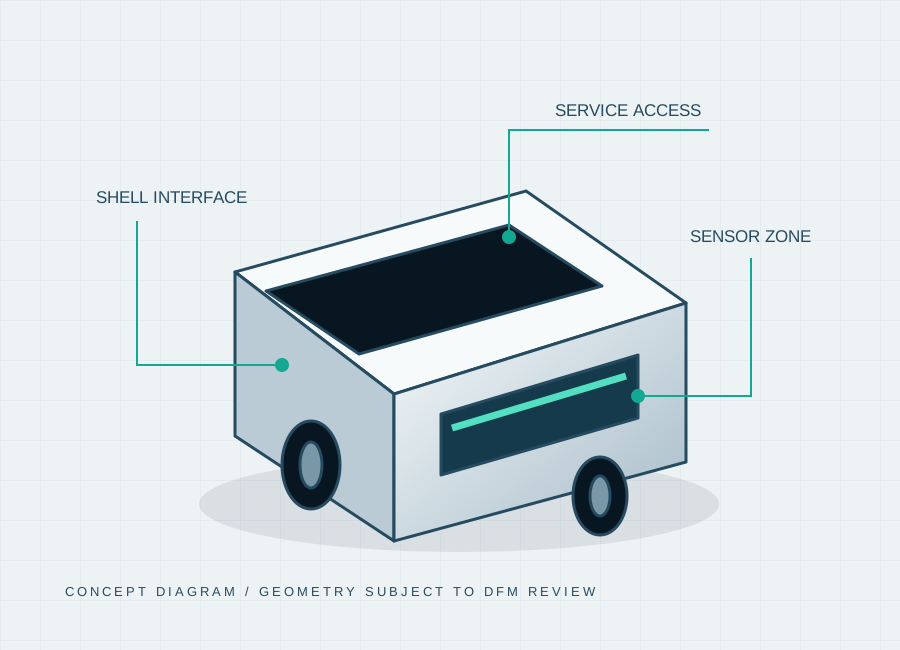
Robot, AMR & AGV housings
Evaluate covers, bases and service enclosures for mobile robots. Large curved hollow forms may suit rotomolding. Mounting accuracy, cooling and sensor clearances need review. Precision frames, drives and safety systems require their own manufacturing routes.
Explore solution ↗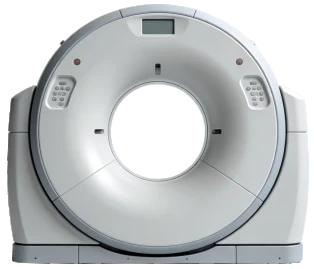
Medical & laboratory equipment housings
The brochure includes CT equipment and portable instrument housings. Review external covers without patient contact, bases and transport protection. Cleaning and assembly need validation. A catalogue image does not establish medical certification, biocompatibility, sterilization or EMC performance.
Explore solution ↗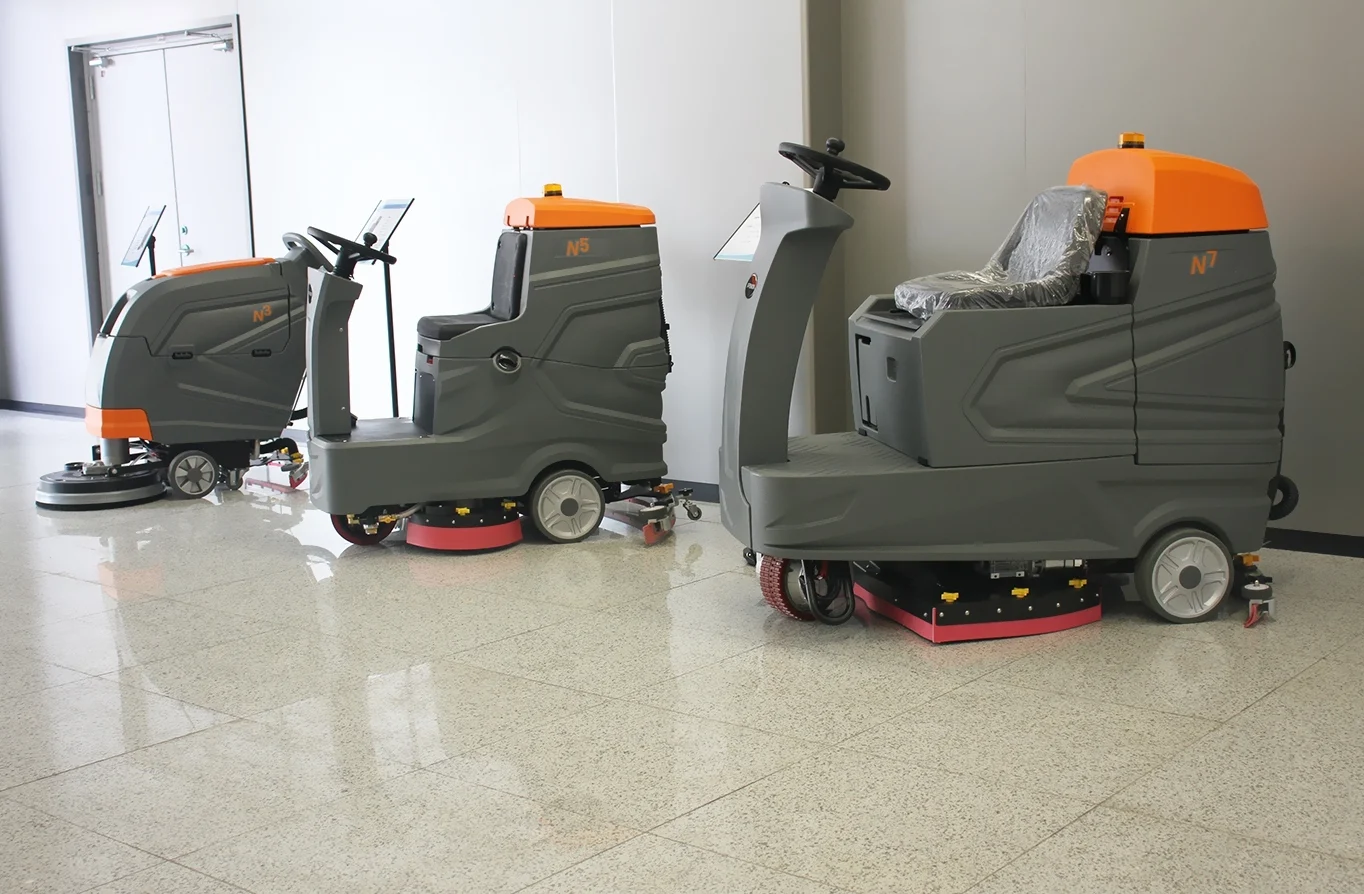
Cleaning robots & scrubber tanks
Develop clean-water tanks, recovery tanks and bodies around your machine layout. The brochure describes a scrubber project with complex tooling, alignment fixtures and airtightness testing. Autonomous models need additional sensor, battery and service-access review.
Explore solution ↗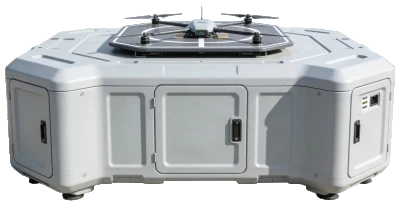
Drone stations & UAV cases
The portfolio shows drone station covers and a large custom UAV case. Define shell stiffness, access, mounts and equipment restraints. Communication, water ingress, operating heat and impact must be verified on the assembled system.
Explore solution ↗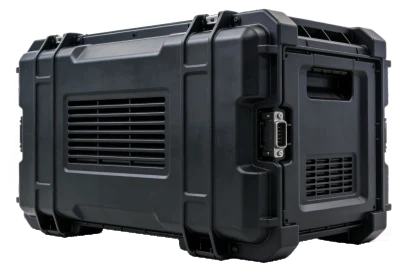
Industrial & instrument protective cases
Start with the equipment, then define shell, foam, handles, latches and seals. Test the whole packed system for drop and vibration. A rugged shell alone does not establish an IP rating or transport performance.
Explore solution ↗Inside Benfan
Benfan brings machinery, mold development and rotational molding together in Zhejiang, China. Our documented workflow covers tool manufacturing and maintenance, material preparation, molding records, secondary operations and product inspection. Work with Victor to define your part, review the manufacturing route and agree the evidence needed for acceptance.
Inside Benfan ↗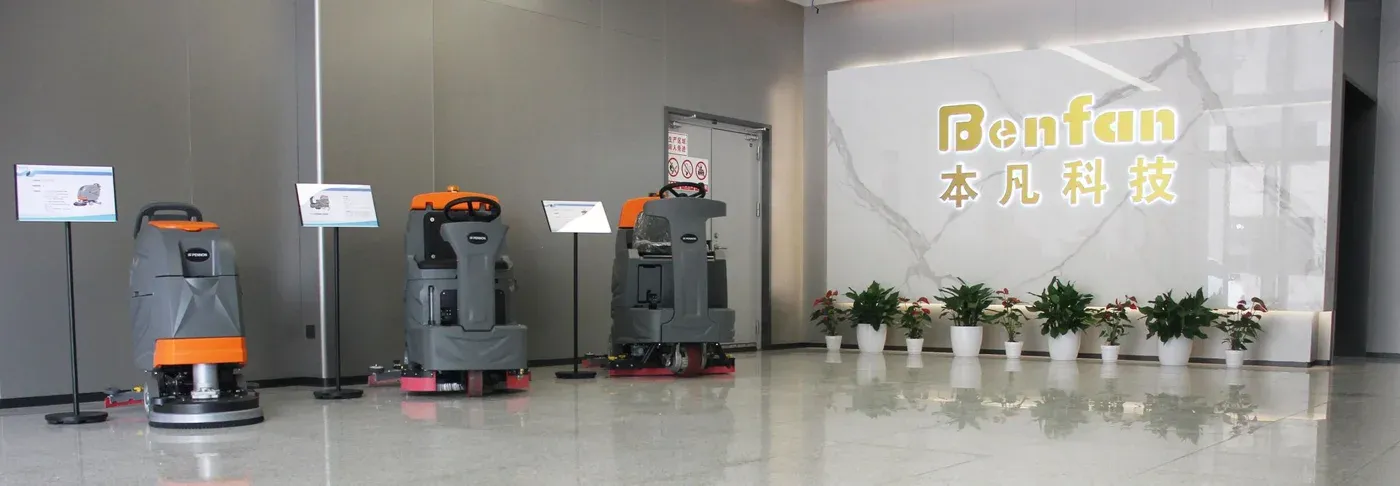
Better decisions start with better questions.
Engineering library ↗LLDPE, HDPE and resin selection
LLDPE and HDPE are common rotomolding resin families, but the family name is not a complete specification. Select a supplier grade using stiffness, impact, environmental stress cracking, processability and operating exposure. Ask for the current data sheet and identify the test conditions behind each value. Do not substitute an injection or extrusion grade solely because it shares the same polymer name. For repeated OEM orders, agree how material or pigment substitutions are approved and recorded.
Read guide ↗Nominal vs minimum wall thickness
Nominal thickness describes a design target; minimum thickness defines the weakest acceptable inspected region. A part can meet its target weight and still have a thin local area. Agree a wall map around corners, fittings and highly loaded surfaces, with the measurement method and sampling plan. Increasing shot weight changes material cost and may lengthen the cycle, but does not automatically solve every thin spot. Check internal volume and mounting clearances when the wall changes.
Read guide ↗Tolerances, shrinkage and assembly datums
Specify the few dimensions that actually control assembly and explain their function. A single tolerance percentage for every rotomolded part is not a useful acceptance standard. Separate molded envelope dimensions from machined interfaces and hole positions. Agree when the part is measured, its support condition and the reference datums. Test the sample on the real mating equipment. A tool made accurately does not remove the influence of resin, pigment and cooling on the final part.
Read guide ↗A clear route from drawing to delivery.
- 01Define requirements
- 02Review design & material
- 03Develop tooling & sample
- 04Approve acceptance
- 05Produce, inspect & ship
For your team
For engineering teams
Review manufacturability before freezing the design. Share the mating structure, critical datums, movement envelope and actual load cases. Separate the molded skin from precision interfaces where helpful. The first useful output is a list of assumptions, open issues and agreed sample tests.
Explore solution ↗For OEM purchasing teams
Compare the same drawing, material, test scope and delivery terms. Request separate tooling, sample, part, fitting and packaging costs. Agree forecasts, release quantities and change rules. Evaluate total delivered value and repeatability, not a headline unit price.
Explore solution ↗For supplier quality teams
Build acceptance around the actual failure modes. Identify critical dimensions, minimum walls, sealing, inserts and batch evidence. Agree sampling, any required full inspection, deviations and change approval before production. Ask for current certificates and reports with their scope rather than relying on logos.
Explore solution ↗For robotics & medical innovators
Explore whether a hollow molded enclosure fits the system before committing to a tool. Define what the cover must do and what belongs to the internal frame. Plan assembly trials, cleaning, thermal management and sensor access. Product compliance and safety remain system-level requirements.
Explore solution ↗