Cleaning robots & scrubber tanks
Develop clean-water tanks, recovery tanks and bodies around your machine layout. The brochure describes a scrubber project with complex tooling, alignment fixtures and airtightness testing. Autonomous models need additional sensor, battery and service-access review.
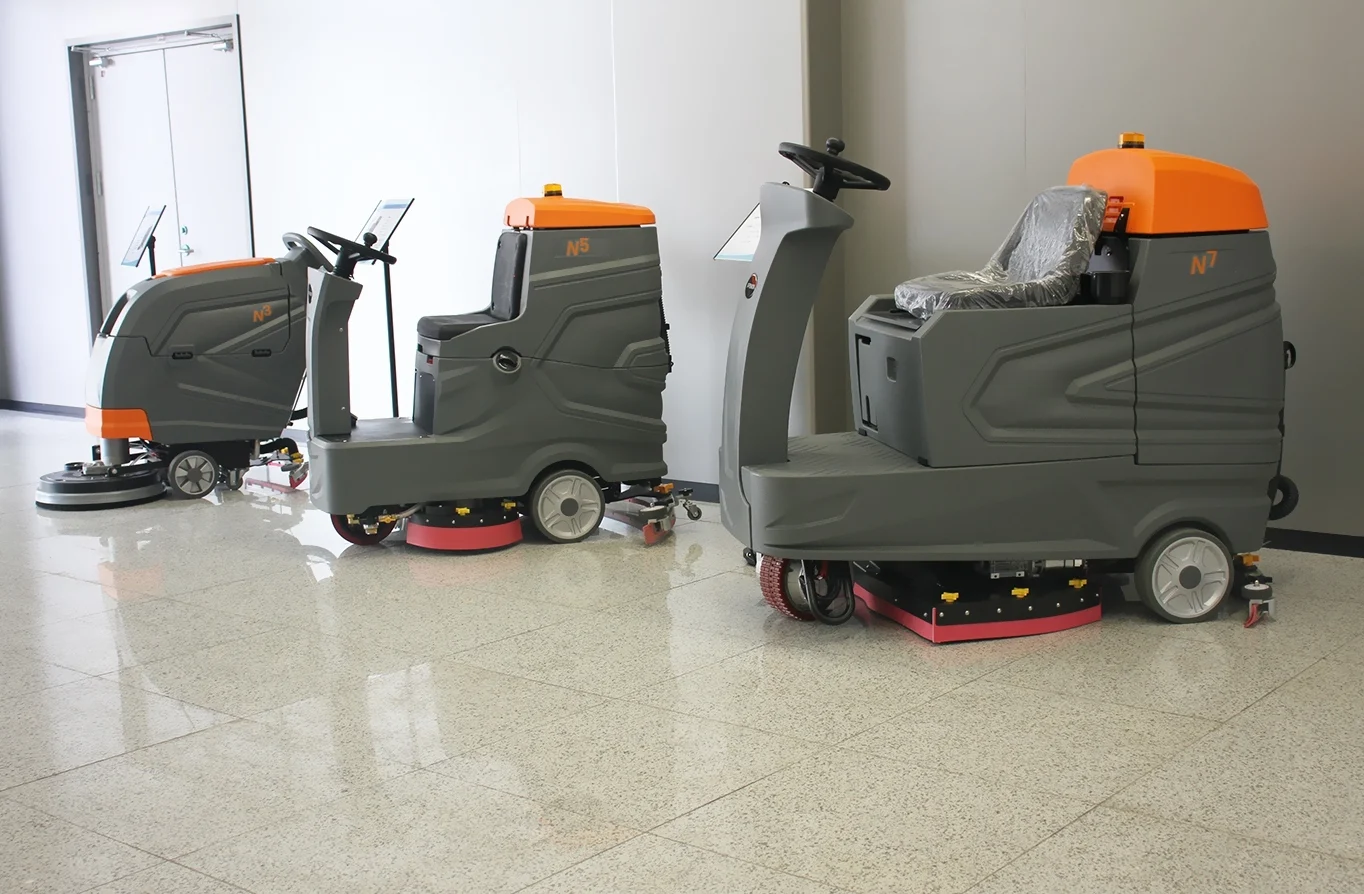
What to send for a useful review
- Medium, concentration and contact duration
- Cleaning agents, disinfection and access
- Critical interfaces, datums and tolerance
- Gaskets, connections and leak test method
- Sensor visibility, heat, grounding and shielding
Catalogue examples show applications, not guaranteed specifications. Grade, dimensions, testing and delivery are agreed for each project.
Discuss your projectContinue exploring
How rotational molding works
Rotational molding heats a measured charge in a slowly rotating hollow mold, then cools the part before removal. Powder distribution, heat transfer, fusion and cooling work together; rotation does not simply force plastic outward like a high-speed centrifuge. Discuss the full cycle when comparing quotations. A short heating time alone does not establish good productivity or acceptable impact performance. For an equipment tank, include trimming, fittings, testing and packing in the production plan.
Read guide ↗Chemical and temperature compatibility
Identify the exact liquid, concentration, temperature and contact duration. General polyethylene chemical resistance does not validate a finished tank with stressed corners, inserts and seals. Include cleaners, rinses and intermittent exposure, not just the stored liquid. Obtain grade-specific supplier advice and agree representative testing. If a customer changes detergent concentration or operating temperature, treat that as a design change. Fuel, hazardous chemicals and pressure duties require a separate technical review.
Read guide ↗Powder quality, preparation and storage
Powder consistency affects flow, fusion and appearance. Record supplier lot, particle specification, contamination controls and storage history. Do not assume every surface defect can be corrected by increasing oven temperature. Compare retained powder and affected parts before changing the recipe. Use the resin supplier’s drying instructions where drying is required; an improvised drying temperature can create another problem. Keep colour mixing, weighing and returned material handling under documented control.
Read guide ↗